
The Hidden Network: Why Soil Microbes Matter for Wine
Imagine digging your fingers into the fresh earth and bringing a teaspoon of soil to your nose. The earthy aroma, rich and complex, introduces a world teeming with life. In that small scoop, there are more living organisms than stars in the galaxy. Most are invisible: bacteria, fungi, protozoa, and countless others form a complex web of life that winemakers now recognise as central to wine quality.
Beneath our Bellarine Peninsula vineyard, billions of mycorrhizal fungi, symbiotic organisms essential for nutrient exchange, colonise the roots of our vines, creating what might be seen as the vine's silent trading floor. These fungi do not harm the plant; instead, they exchange essential elements such as phosphorus, nitrogen, and trace minerals for carbohydrates produced by the vine through photosynthesis. This ancient and profound partnership has evolved over millions of years to benefit both parties.
Conventional agriculture, with its reliance on synthetic fertilisers and fungicides, has disrupted this delicate exchange. Regenerative viticulture seeks to restore this natural balance through specific steps. Initially, we conducted thorough soil assessments to identify existing microbial life. We then applied custom composts infused with diverse fungal cultures to reinvigorate the soil. These composts were tailored based on microbial populations, ensuring compatibility and effective integration. Additionally, planting native cover crops helped establish organic matter and provided ideal conditions for fungi to flourish.
This biological understanding has overhauled our farming at Circulus Wine.
Regenerative viticulture, as defined by the Regenerative Viticulture Foundation, aims to "restore and enhance ecosystems, not merely sustain them." This distinction is crucial to our main argument: sustainability maintains, but regeneration improves both soil and wine.
What the Science Says: Microbes and Terroir
For years, wine professionals spoke of terroir as the unique expression of soil, climate, and tradition. But science has evolved. A landmark global survey of vineyard microbiomes spanning 200 vineyards across four continents revealed that microbial biodiversity is among the one of the strongest predictors of wine terroir. It's not just the minerals in the soil; it's the living biology. More striking: researchers studying Australian vineyards found that soil fungal diversity was the single strongest predictor of wine aroma characteristics, explaining almost the entire aroma fingerprint of wine regionality. The mechanism is direct: fungi move from soil through the vine's root system, influence the vine's metabolism, and shape the aromatic compounds that eventually define the wine's sensory profile.
Organic and regenerative practices amplify biological richness. Studies show they consistently deliver higher microbial abundance, diversity, and beneficial fungal colonisation than conventional approaches, enhancing both soil health and wine quality.
These findings underscore what we've experienced at Circulus.
Since acquiring our vineyard in 2021, science has played out in measurable terms: we've tripled our microbial biomass carbon and increased earthworm populations from 68 to 218 per gram of soil. These aren't vanity metrics; they're the biological foundation of the wines we produce. The increased microbial biomass translates directly to brighter citrus notes in our Chardonnays and a more vibrant raspberry character in our Pinot Noirs, bridging the gap between soil science and sensory experience.
The Bellarine Story: Soil Type, Soil Life, and Terroir
Our vineyard sits on the Bellarine Peninsula, a maritime amphitheatre surrounded by water; Port Phillip Bay to the north, Corio Bay to the west, Bass Strait to the south. The cool, steady offshore breezes moderate our climate, preserving natural acidity and reducing disease pressure. But what truly shapes our terroir is the soil.
This microbial diversity maps directly onto our vineyard's soils. Our front and western blocks, with red-brown-gray clay overlaying limestone and basalt, offer calcium and iron-rich terroirs that influence wine style, texture, roundness, and a signature saline minerality in our cool-climate Bellarine whites. Meanwhile, our north blocks, set on sandy loam, promote drainage and a distinctly different fungal network, yielding lighter, more aromatic wines with higher acidity.
Each soil type is not just a chemical substrate, but a living biological system crucial to our wine’s identity. Microbial communities thriving in clay-rich soils differ from those in sandy soils, and those differences directly shape nutrient uptake, sugar metabolism, and grape composition, reinforcing our main argument that soil biology drives wine character.
Our regenerative approach reflects this understanding. Instead of chemically 'fixing' our soils, we've focused on building them biologically.
Step 1: Custom organic compost. Based on annual soil tests, we apply bespoke compost mixes rather than off-the-shelf fertilisers. This feeds the microbial community rather than bypassing it. Over four years, soil carbon has risen from 1.8 per cent to 2.6 per cent, a 44 per cent increase, approaching our 3.3 per cent target.
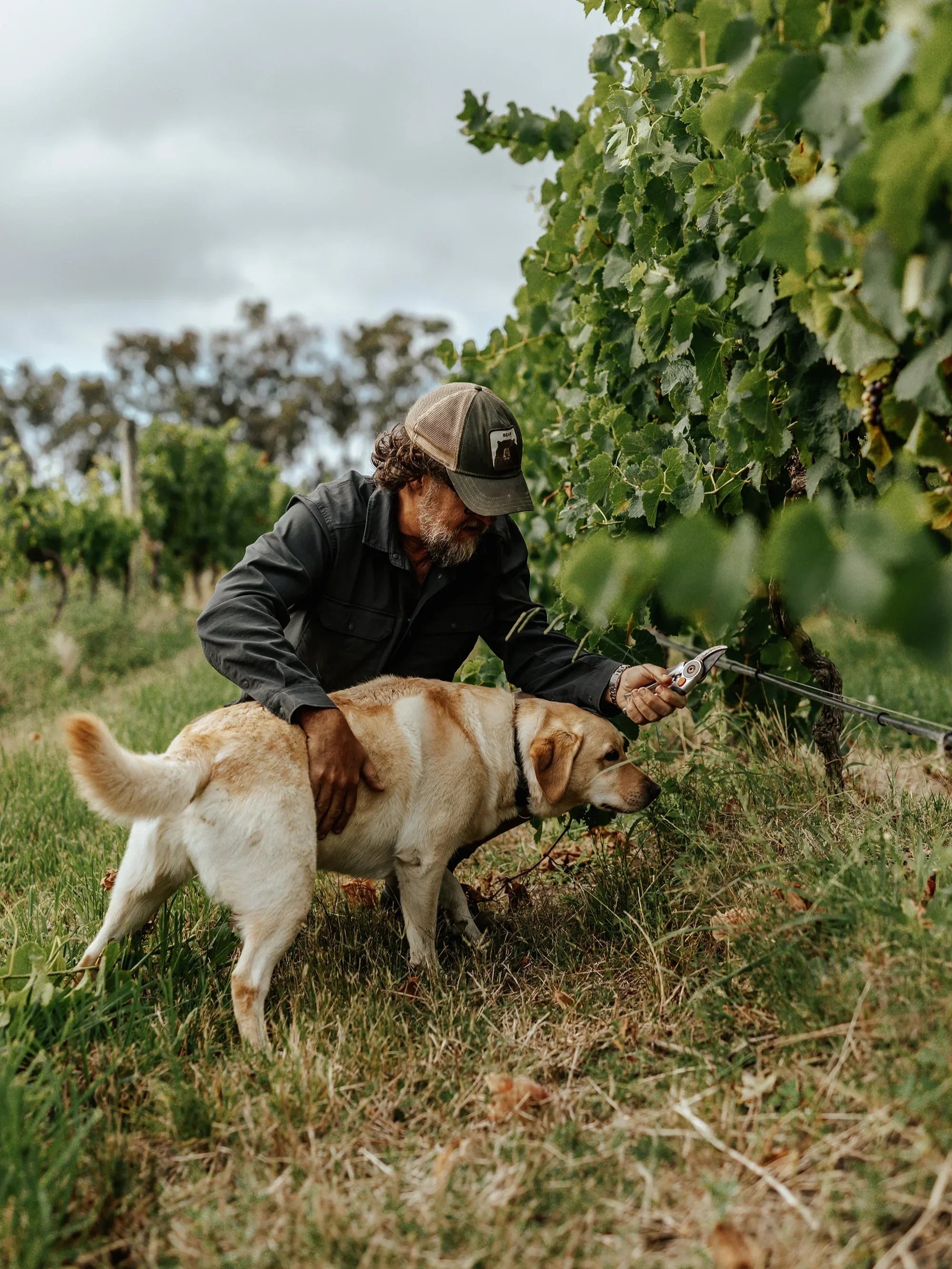
Step 2: No-till, multi-species cover cropping. We've eliminated mechanical tillage under vines and in mid-rows, replacing it with permanent native grasses such as wallaby and weeping grass and mixed-species cover crops. Living roots keep soil intact. The plant biomass feeds microbes. Fungi thrive.
Step 3: Integrated livestock grazing. Sheep graze during dormancy, their gentle treading aerating soil and their manure returning nutrients. Regenerative grazing isn't industrial. It is a conversation with nature about how animals, plants, and soil microbes can work together.
Step 4: Biodiversity buffers. We've set aside 23 per cent of our 32.5-hectare property for indigenous revegetation and shelter belts, partnering with the Wadawurrung Traditional Owners, Landcare, Trust For Nature and our local Catchment Authority. The number of bird species has increased from 28 to 47 since 2021, following the installation of bird and bat boxes. This matters because diverse native flora supports diverse soil microbes, which in turn support vine health.
The Payoff: Dimensionality and Vitality in the Glass
When we first took over the vineyard in 2020, the fruit was lean and uneven, reflecting the depleted soils we inherited. Through four years of dedicated soil restoration, we've seen a remarkable transformation in our harvests. In 2025, our Chardonnays averaged 12.1 Baume at harvest, with natural acidity (TA 7.2–8.1 g/L) and pH ~3.5, which are textbook markers of balanced, age-worthy fruit. Our Pinot Noirs averaged 12.8 Baume with a silky structure and fine tannins, illustrating the balanced elegance we've achieved. These weren't just lucky vintages; they reflect our commitment to soil health and sustainable practices. Scientific studies now document the direct correlation between improved soil health and fruit quality, showing measurably higher levels of anthocyanins and distinct volatile aroma profiles compared to conventional vineyards.
To further illustrate regenerative viticulture's impact on wine quality, a recent analysis in The Real Review by Liina Berry offers crucial insights:
"When soils are biologically alive, vines are not simply extracting water and minerals, but participating in an ecosystem that modulates stress, balances growth, and mediates nutrient flow. The result in the glass is not a single 'flavour of soil' but a heightened precision. The wines have a palpable vitality and register not as louder in flavour, but as more dimensional. They don't read as varietal clichés or cellar-crafted archetypes.
Furthermore, she states:
Living soils support a greater diversity of yeasts, fungi, and bacteria, which in turn broaden the spectrum of metabolites active during fermentation. The result is wines with textural nuance: mid-palates that feel layered rather than linear or sterile, acidity that integrates more seamlessly with phenolics, tannins that resolve with suppleness rather than astringency. Aromatically, the difference can be striking, not in obvious 'wild' notes, but in the presence of savoury compounds, mineral tones, and secondary layers that lend depth to fruit expression."
This passage distils what we've experienced at Circulus over the past 4 years. Our Chardonnay and Fumé Blanc show greater minerality, while our Pinot Noir and Syrah display more textural complexity and savoury depth. These aren't cosmetic changes; rather, our wines are expressing a more distinctive terroir as the underlying soil biology becomes more robust—they are becoming more themselves.
Chemical Inputs: Less Is More
We've reduced chemical sprays by 62 per cent since 2021. This isn't dogmatism. It's a strategic restraint. This reduction has not only supported ecological balance but also led to an estimated annual savings of $8,000, boosting our margins.
Synthetic fungicides and herbicides kill indiscriminately. They suppress pathogens, yes, but they also suppress the beneficial fungi and bacteria that underpin soil resilience. By minimising chemical interventions, we're protecting the microbial networks that do the real work: nutrient cycling, disease suppression through competition, and the production of metabolites that shape wine flavour.
Instead, we've deployed integrated pest management (IPM) grounded in biology: predatory mites, Trichogramma wasps, and cover crops that harbour beneficial insects. We use organic sprays like Uptake Elite and Soil Activator that support rather than suppress soil biology. And where we do intervene, we rotate actives to avoid resistance while protecting beneficial organisms. The result? Lower input costs, long-term, healthier vines, and wines that taste like themselves.
Water, Resilience, and Climate Adaptation
For every 1 per cent increase in soil organic matter, a vineyard can hold an additional approximately 75,000–150,000 litres of water per hectare. In an increasingly variable climate, that's the difference between survival and collapse. Now is the time to champion regenerative viticulture, not only for wine quality, but for the future resilience of our land and communities, and the legacy we leave behind.
Our automated irrigation system, paired with soil-moisture probes and weather station data, has cut water use by 28 per cent compared to our 2021 baseline. But the real resilience comes from the soil itself. Water infiltration rate has improved 147 per cent, from 38 to 94 mm/hour—thanks to mulching and cover crops. This means rainfall soaks deeper, stays longer, and is available to roots during dry periods.
In the last 3 years, including this season, we have faced unusually dry growing seasons. Yet our fruit retained natural acidity, suggesting stable water availability throughout ripening. Other vineyards reported stressed vines and compromised phenolics. Our restored soils kept the vines hydrated and balanced.
This is what regenerative viticulture offers in an era of climate variability: not just lower greenhouse gas emissions (we're net-negative, sequestering 4.2 tonnes of CO₂-e annually), but enduring resilience.
The Bigger Picture: A Market Opportunity
Estimates suggest that 0.1 per cent of the world's vineyards practice regenerative viticulture today. To put that in perspective, there are currently more three-star Michelin restaurants worldwide than there are vineyards dedicated to regenerative practices. The Regenerative Viticulture Foundation has set an ambitious goal: 10 percent by 2035.
In Victoria, we're fortunate to count among only six regenerative vineyard operations. In Geelong, our home region, just two vineyards are walking this path. That's a rare privilege and a growing responsibility.
Consumer appetite suggests this approach will scale. Globally, 44 percent of regular wine drinkers are willing to pay a premium for sustainable wines. In Australia, that figure matches the global average. More strikingly, younger drinkers, Millennials and Gen Z are two to three times more likely to seek out sustainably produced wines compared to older generations. The organic wine market alone is projected to triple by 2030. Yet only 7 percent of Australian wineries are certified organic or biodynamic.
For those of us committed to regenerative practices, the opportunity is clear: we're building wines for a market that's actively seeking them.
Certification: The Label Question
We're members of the Regenerative Viticulture Foundation and aligned with the Regenerative Viticulture Alliance framework. Certification programs are evolving to recognise regenerative work through organisations like the RVA, Regenerative Organic Certified, Land to Market, and A Greener World. These programs increasingly measure outcomes such as soil carbon gains and biodiversity improvements rather than prescribing practices. As Justin Howard-Sneyd of the RVF reminds us, 'Regeneration isn't another label; it's a mindset.' We believe the label follows the soil, not the other way around.
We view certification as a tool to communicate our commitment transparently and to align ourselves with a growing community of growers. The real certification is in the glass: wines that express distinctive terroir because they're grown in soil that's alive, diverse, and resilient.
The Journey, Not the Destination
"Regeneration isn't something you achieve. It's something you practise."
This statement resonates deeply at Circulus. In 2021, we inherited degraded soils. We didn't flip a switch and become regenerative. We started with soil tests. Then, custom compost. We gradually introduced cover crops, aware that moving too fast could have stressed vines in transition. In fact, our initial cover-crop mix was too aggressive and choked some of the younger vines. We learned quickly from this misstep and adapted our approach to nurture both soil and plant health simultaneously. We deployed technology: AI models that help us predict optimal timing for irrigation and spraying. We've partnered with AgVic, Sustainable Winegrowing Australia, Bellarine Landcare, Corangamite Catchment Authority, and indigenous guides from the Wadawurrung community.
We've faced challenges. A dry winter in 2024 stressed young Chardonnay plantings. Lambing was traumatic, with low survival rates. Grafting Merlot and Malbec to Chardonnay didn't go perfectly. We learn from everything and adapt.
This isn't a marketing campaign. It's the slow, deliberate restoration of a living system. And it's the only way to farm that makes sense to us anymore.
An Invitation
If regenerative viticulture seems technical or distant, it isn't. It's fundamentally simple: work with nature rather than against it. Build soil biology rather than mining it. Make decisions that compound over time.
When you taste our Chardonnay with its saline mineral notes shaped by basalt and limestone, or our Pinot Noir with its textural depth and savoury layers from restored soils, you're experiencing the result of this commitment. You're tasting a wine grown in soil that's more alive, more resilient, more expressive—and a wine that captures what Liina Berry calls "palpable vitality" and "dimensional" complexity.
The Regenerative Viticulture Foundation reminds us that this shift happens through shared knowledge and genuine relationships. That's why we're transparent about our data, why we welcome vineyard tours, why we participate in field days and community partnerships. We believe the future of wine belongs to growers willing to ask better questions of themselves and the land.
The soil remembers everything: the ploughs we ran, the chemicals we poured, the microbes we ignored. But it also forgives. Given time, cover, and care, it comes back to life.
We're proving that every day.
Learn More
About Circulus Wine: www.circuluswine.com.au
About Regenerative Viticulture:
Key Research:
Bellarine Region & Partnerships: